
Metal expansion joints play a vital role in piping systems across loads of different industries and infrastructure projects, soaking up the kind of thermal expansion, movement, and vibration that can really put a strain on things. The following guide is designed to help engineers and project managers in Australia and around the world pick the right type of metal expansion joint for their specific needs.
Getting A Grip On Metal Expansion Joints
Metal expansion joints – usually made up of corrugated metal bellows – are a lifesaver for piping systems, vessels and equipment that have to put up with temperature changes and operational dynamics. They’re used wherever fluids or gases are being transported under tough conditions.
-
They’re designed to deal with movement in all directions within pipelines (axial, lateral, angular)
-
You’ll find them in things like power generation, oil & gas, the chemical industry, mining and water treatment, where they’re essential for the smooth running of these systems
-
They can be made from high-quality stainless steel bellows and other high-alloy materials to last for a seriously long time
-
They can have all sorts of accessories slapped on them, like tie rods, liners and covers, depending on the specific application
-
They’ve got to meet the very highest industry standards, including EJMA and EN codes
-
This guide will cover the different types of expansion joints, materials, standards and day-to-day selection guidance, and it’s worth remembering that in some services non-metal expansion joints and bellows can be a better fit due to their corrosion resistance and flexibility.
How Metal Expansion Joints Work in Piping Systems
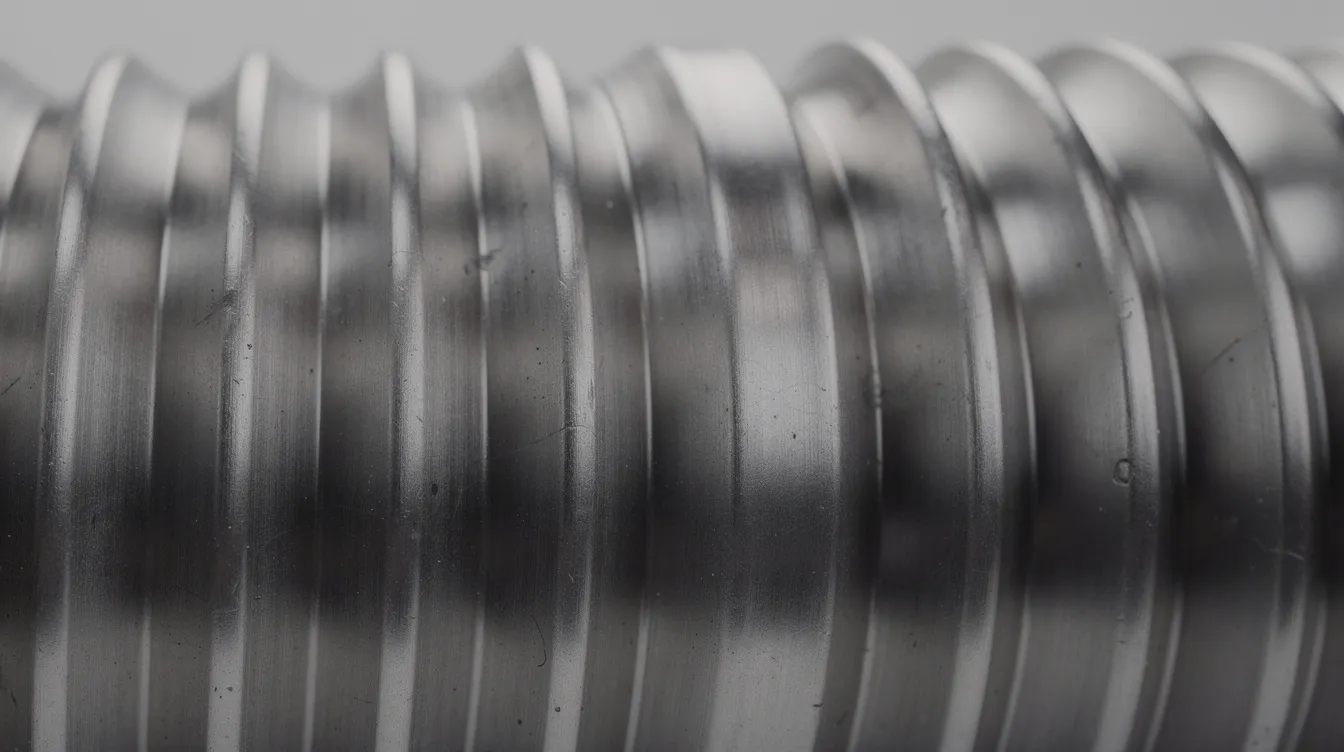
At its heart, a metal expansion joint is a flexible metal bellows with convolutions, end connections (weld ends or fixed flanges) and some optional extras. The bellows flexes to take on movement without passing on too much stress to the surrounding equipment.
-
The convolutions squash, stretch or deflect to deal with thermal growth in straight pipe runs
-
Axial movement is soaked up along the pipe centreline; lateral movement deals with sideways drift
-
Angular movement accommodates rotation at connection points
-
They can reduce nozzle loading on pumps, compressors, heat exchangers and vessels
-
They can work in seriously tough temperatures, from the cryogenic conditions below -196°C up to 600-800°C
-
They can work with high pressure too, from low pressure ducting all the way up to 300 psi in process lines
-
They can absorb vibration and pulsation near reciprocating equipment
What’s So Good About Metal Expansion Joints
When picked and installed right, metal expansion joints can really extend equipment life, improve reliability and bring down maintenance costs in loads of different industries.
-
Thermal expansion management: They stop pipe distortion, flange leaks and equipment nozzle overloads
-
Vibration damping: They isolate pumps, turbines and compressors from piping stress
-
Space efficiency: They’re compact in design, so they’re perfect for plant rooms where space is at a premium
-
Flexibility: They allow multi-plane movement in a single installation
-
Less maintenance: Fewer gasket replacements and realignments when designed correctly
-
Cost-effectiveness: They’re a higher CAPEX option but they can last for 10-20+ years and bring down OPEX
-
Safety: They prevent ruptures and leaks in hazardous process environments
Different Types of Metal Expansion Joints
There are loads of standard designs out there that are used to deal with different movements and loads. Most real-world systems use a combination of anchors and guides, and many projects call for custom-designed metal expansion joints that match specific movement, temperature and pressure conditions.
-
Axial joints: These absorb longitudinal movement along the pipe axis
-
Universal expansion joints: These handle large axial movements plus lateral offset
-
Lateral joints: These are designed for transverse centreline shifts
-
Angular joints: These rotate around a single plane or multiple planes using hinges
-
Hinged/gimbal types: These are used to provide controlled rotation with mechanical constraints
Axial Metal Expansion Joints
Axial joints are the most commonly used design and are used to absorb movement along the pipeline axis with a single bellows element.
-
They can be built with weld ends or flanges and sometimes with internal liners
-
They’re installed between fixed points where longitudinal thermal growth is the big driver
-
They’re used in steam lines, hot water distribution and process pipelines
-
They need proper pipe guiding (every 10-20 pipe diameters) and anchors
-
They can prevent buckling and instability when correctly supported
Universal Metal Expansion Joints
Universal expansion joints use two bellows separated by a centre spool to allow larger movements in multiple directions.
-
They can accommodate both axial and lateral movement in one unit
-
Tie rods or control rods are used to manage pressure thrust and limit deflection
-
They’re ideal for long above ground runs, ducting and connections to settling vessels
-
They have a lower pressure rating than equivalent single-bellows designs
-
They’re the best solution when misalignment or settlement is expected
Lateral and Angular Metal Expansion Joints
Lateral joints absorb sideways movement, while angular joints handle rotation-often using hinges or gimbal hardware.* Lateral: You use bellows with rods to absorb the thrust – while still allowing for deflection in any direction
-
Angular: A single rotation – or even multiple rotations at different angles – via hinges or gimbals
-
They show up all the time in boiler outlets, big ducts and multi-directional piping
-
They get integrated into expansion systems and come with engineered anchor and guide layouts
-
They are a pretty clear case apart from axial joints in needing that extra thrust reaction hardware
Multi-Ply Bellows Design & Construction
We create multi ply bellows by stacking 2-4 super-thin layers of stainless steel on top of each other and then welding them together into a thicker shell that gives you better performance, similar in concept to other engineered metal expansion joint designs used in high-demand industrial piping systems.
-
They give you way more flexibility compared to a single layer – so they can withstand a lot more use and abuse
-
Improved fatigue life – up to 1 million cycles – even in those high-cycle applications and they’re less prone to all sorts of damage like pitting, mechanical knock around or corrosion, which is just what you need when you’re working with equipment that’s going to see some serious action.
-
You see them in use in compressor connections and process lines that are going through temperature swings so big they’ll be bouncing up and down like a yo-yo.
-
The form and method of construction that goes into a metal bellows makes a pretty big difference in its overall durability and cycle rating.
Metal Bellows and Component Materials
Material selection all comes down to finding the right stuff for the job – which means you have to consider things like temperature, pressure and the level of corrosion resistance that you need.
|
Material |
Typical Use |
|---|---|
|
304/304L |
General service up to 425°C |
|
316/316L |
Chloride resistance, desalination, coastal plants |
|
321/347 |
High-temperature power applications up to 800°C |
|
Inconel 625 |
Extreme temperatures above 1000°C |
|
Hastelloy C-276 |
Aggressive chemical environments |
|
Duplex |
Slurry abrasion in mining |
|
End fittings, rods and liners might need to be made from different materials depending on the project – and your bottom line. |
|
Where Metal Expansion Joints Come In
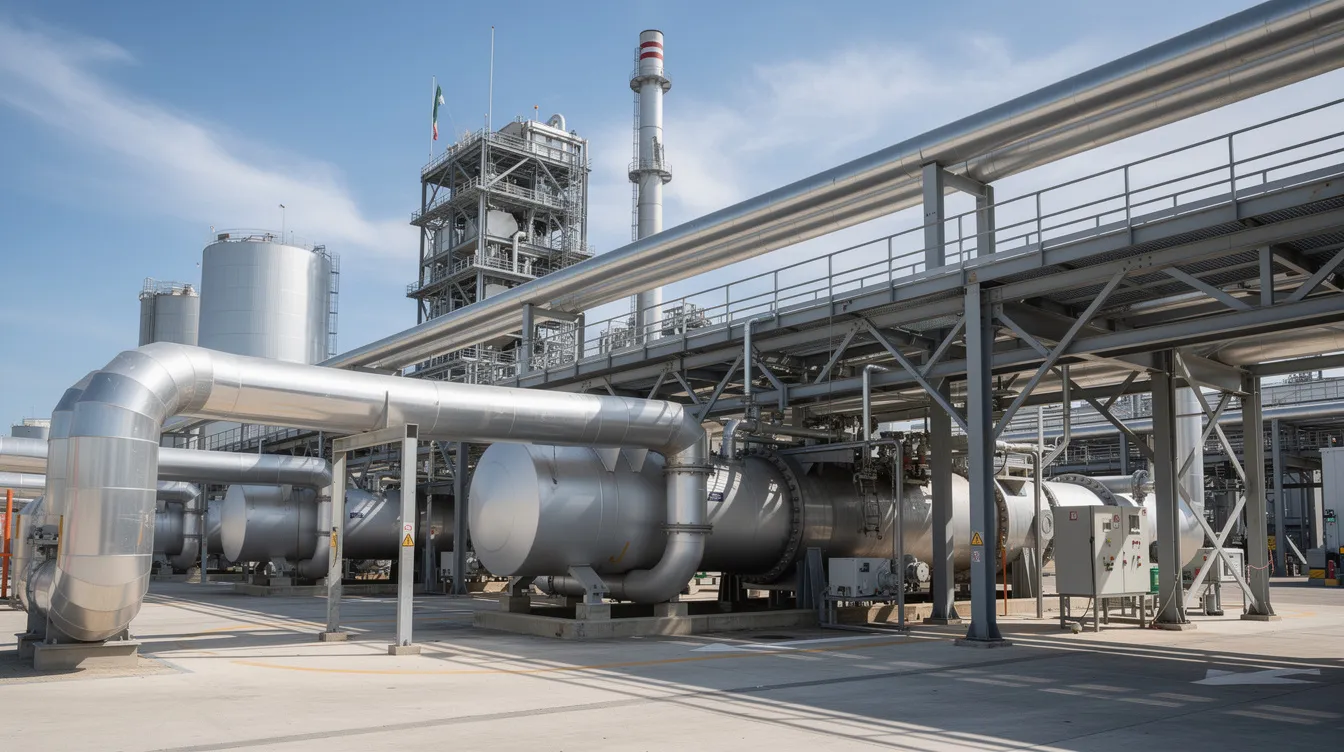
Metal expansion joints are the workhorses of the industrial world – providing top-notch performance in situations where fluids or gas are flowing under pressure and temperature – basically everywhere, and they’re often supplied by specialist industrial expansion joint manufacturers with deep experience in energy, petrochemical and process applications.
-
Power generation: Think HRSG ducting, turbine exhaust systems and feedwater piping
-
Oil & gas: Refinery process lines, diesel exhaust, high-temperature duties where expansion joints and industrial bellows specialists can help engineer the right solution
-
Chemical industry: Connections for reactors and handling of corrosive media
-
Mining: Slurry line transitions and pump isolation
-
Water treatment: Desalination plants and installations that need corrosion-resistant and stainless steel expansion joints.
Examples of Metal Expansion Joints in Action
Chemical plant steam upgrade (2022, Eastern Australia): We used Universal multi-ply 316 bellows (DN300–600, 300°C/20 bar) to fix a thermal growth and vibration problem, and the result was 5 years of maintenance-free operation.
Mining slurry pipeline (2021, WA): Using Tied lateral joints with duplex bellows and abrasion liners cut pump nozzle loads by 40% – and extended maintenance intervals to 3 years.
LNG facility HRSG (2023): Inconel 625 gimbal configuration managed multi-plane duct movements with zero failures through initial operating cycles.
Safety First: Standards, Testing, and Quality
Expansion joints are safety critical items – so they have to be built in accordance with recognised standards and go through some pretty tough testing before they’re allowed to be used, which is why many operators rely on partners with comprehensive expansion joint design, manufacturing and inspection capabilities.
-
Build to EJMA and EN 14917 guidelines – and make sure they’re good to go with AS/NZS piping codes.
-
Hydrostatic pressure testing at 1.5 times design pressure
-
Helium leak testing where required (<10^-6 mbar l/s)
-
Non-destructive examination (NDE) including dye penetrant, radiography, and ultrasonic examination
-
You need to have your quality systems in place – that means ISO 9001 for traceability and ISO 45001 for HSE
-
Complete documentation – so that you can prove your commitment to reliability
Keeping It Running
Regular checks are essential – especially in high-temperature or corrosive duties where you need expertise to get it right.
-
Visual checks: Check the convolution condition, leaks, corrosion, deformation
-
Typical intervals: Every 2-5 years – when you’re doing a plant shutdown
-
End-of-life indicators: Cracking, thinning, permanent distortion
-
Keep track of movements, cycles and environmental conditions
-
With proper maintenance – they can handle pretty much anything.
Getting the Right Expansion Joint
If you get it right at design stage – it’s all about safety and reliability – so make sure to give your manufacturer all the following details:
-
Line size, design pressure, temperature range* Medium: consider the corrosivity, erosivity and chloride content within it
-
The movements involved will be Axial, lateral and angular ones, with specific lengths and directions
-
Installation constraints and life cycle requirements will need to be taken into account
-
Getting the interactions of Anchor, guide and support right is crucial
It’s really important to get the team with the right expansion joint expertise in the selection and configuration process – ideally experienced engineers who can validate your selection & offer advice.
Common Specification and Installation Pitfalls to Watch Out For
-
Pushing on and completely ignoring the impact that pressure thrust forces can have on pull-apart failures
-
Being way off on movement estimates – you’re probably underestimating by 20–50%
-
Getting anchors and guides all wrong
-
Messing up the cold-pull or pre-tensioning during installation – it’s a critical part of the process
-
Welding in the bellows during fitting can be a disaster – the heat and all that
-
Not properly insulating can lead to water pooling and corrosion in no time
-
Trying to use joints to correct misalignment beyond what they’re even rated for? No way
Call in a pro to get the basics right – orientation, installed length verification, and commissioning checks. Proper installation starts with pride in the work and saves you a whole lot of trouble – costly failures are a thing of the past and you can be confident your system will give you decades of reliable service.