
What are metal bellows expansion joints?
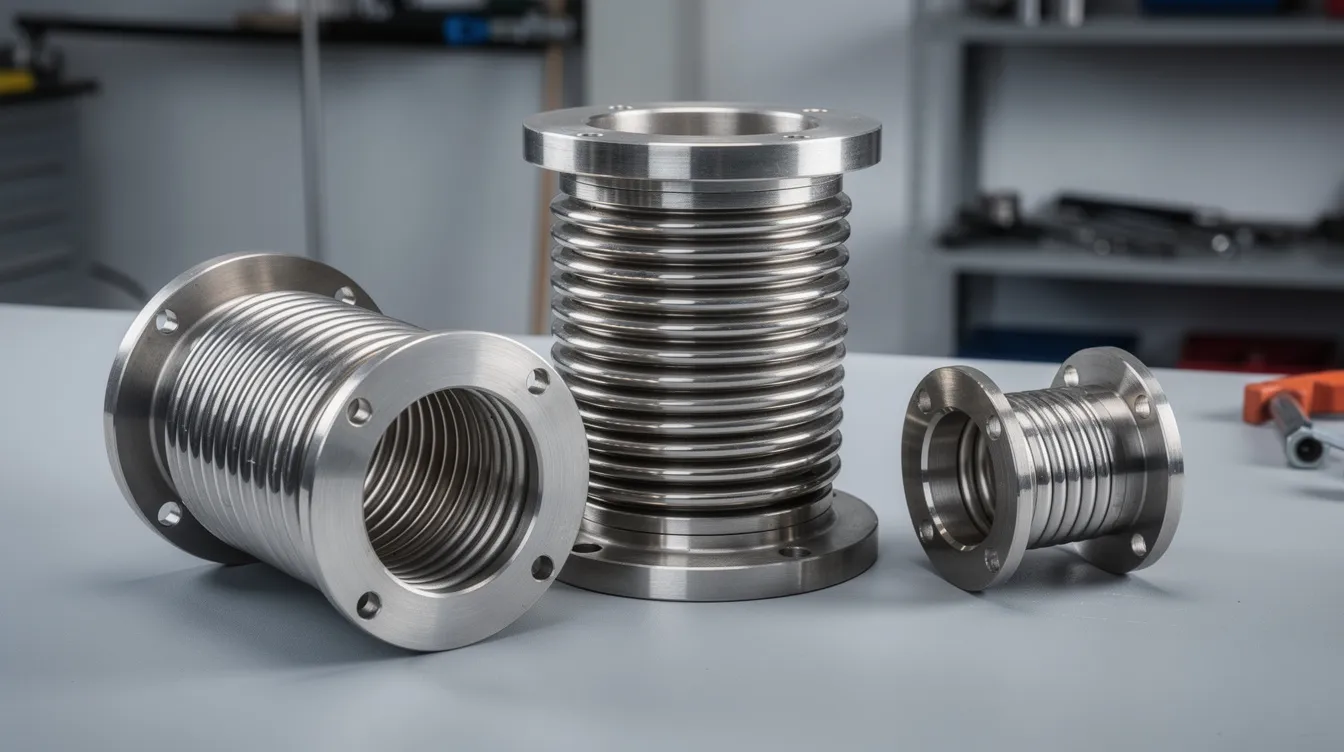
Metal bellows expansion joints are a type of flexible connector that are made from corrugated stainless steel. They handle thermal expansion, vibrations and mechanical mis-alignment, keeping pipe work secure and sealed across different industrial applications.
From power stations to oil rigs, chemical plants to air conditioning systems and water treatment plants all over Australia and further afield – the applications are endless. Get one properly specified and you’ll extend the life of your equipment, cut down on unplanned shutdowns and make your whole plant a safer place to work.
Key benefits of metal bellows expansion joints include:
-
they let you manage thermal growth without stressing or cracking the pipes
-
they can knock out vibrations from spinning machinery
-
they provide leak-free operation using secure stainless steel seals
-
they take up far less space than the old expansion loops
-
they require virtually no maintenance after you install them
There’s a big range of expansion joints and bellows to choose from, so whatever your application is – we’ve got you covered.
How Metal Bellows Expansion Joints Work in Practice
The bellows of the joint are wave-like corrugations that allow it to flex under pressure and temperature changes. This allows the movement to be controlled while the system pressure stays safe across the whole operating range, from -196C to +900C.
The three main movement modes that define the bellows are:
-
Axial: how it compresses and extends along the length of the pipe
-
Lateral: how it bends from side to side at a right angle to the pipe
-
Angular: how it changes direction at joints
Design calculations are based on industry standards, including the EJMA, EN 14917 and ASME codes. This lets engineers do stress analysis, predict the lifespan and check how much movement the bellows can enable – all to ensure reliability in tough applications.
What are the different Types of Metal Bellows Expansion Joints?
Different joints are suited to different movement patterns and installation requirements. Choosing the right type depends on which movement mode is the most common in your facility, and what kind of space you have to work with.
Common types include:
-
Single Axial: for straightforward linear expansion
-
Universal Tied: handles axial, lateral and angular movements at once
-
Hinged: lets you rotate in a single plane
-
Gimbal: lets you rotate in multiple planes
-
Pressure Balanced: stops pressure thrust from damaging connected gear
-
Externally Pressurised: handles high-pressure applications with extra stability
They come in a range of sizes DN25 to DN4200 diameter, with the ability to go from complete vacuum to 80 bar.
Clamshell and Field-Welded Expansion Joints
Clamshell bellows are manufactured from multiple segments that can be slipped over existing pipes or in tough spots without cutting anything. This makes it easy to position and then assemble and weld. The number of convolutions in the bellows can be configured to fit your specific application needs – giving you modularity and a lot of flexibility. This cuts downtime for emergencies way down.
Typical specs:
-
Diameters up to 4250 mm (170 inches)
-
Pressure ratings up to 80 bar (1,200 PSI)
-
Temperature capability to 900*C
On-site welding by certified welders with x-ray and dye penetrant inspection afterwards makes sure everything is airtight. Some common use cases include power station ducts, FCCU vessels, and exhaust stacks.
Custom-Engineered Configurations
Most industrial installations require custom metallic expansion joints rather than off-the-shelf products. Key customisation variables include convolution count, wall thickness, single-ply versus multi-ply construction, overall length, and end connections.
You can also get additional hardware like tie rods, hinges, and internal sleeves tailored to specific flow conditions. Some examples include high-cycle units for compressor discharge and equipment designed to last for 50 years in district heating networks.
Materials and Construction
Choosing the right materials has a huge impact on corrosion resistance, fatigue life and high-temperature performance. Typically, manufacturers use 304L or 316L stainless steel for their general-purpose bellows.
Some common materials used:
-
304/304L: for general industrial service
-
316/316L: for marine or environments with a lot of chloride
-
Inconel 625: for extreme temperatures and corrosive media
-
Hastelloy C-276: for severe chemical service
Manufacturers may also use alloys like Monel and Hastelloy for really aggressive chemical environments and can even boost chemical resistance with internal PTFE linings. Multi Ply construction with 2-5 thin layers are preferred to out single thick-wall designs when it comes to flexibility & cycle life. Internal liners do a great job of combating against erosion from particulate-laden media.
Stainless Steel Bellows
Stainless steel bellows are a specialised type of metallic expansion joint designed specifically to absorb thermal expansion, vibrations & movement in piping systems, and are a core focus for industrial expansion joints & precision bellows specialists. Without a doubt a critical component in many industries, stainless steel bellows provide a reliable, efficient solution for managing thermal growth and pressure fluctuations – keeping piping networks intact for the long haul.
INTAFLEX offers a full range of stainless steel bellows, each one built to meet the unique demands of different applications. Whether you’re looking for single-ply bellows for everyday movement or externally pressurised designs for higher pressure & stability, INTAFLEX’s products are designed to deliver top-notch performance. And it’s worth noting they’re made from high quality stainless steel materials which provides excellent resistance to corrosion and fatigue, even under extreme temperature and pressure conditions.
The versatility of stainless steel bellows allows flexible movements – axial, lateral and angular – all while keeping full pressure containment intact. Their solid construction and engineered flexibility do a great job of absorbing vibrations and compensating for thermal expansion, which reduces stress on piping systems and connected equipment. With a wide range of types & configurations available, INTAFLEX’s stainless steel bellows are built with reliability & longevity in mind – giving engineers & operators peace of mind.
By offering a comprehensive selection of stainless steel bellows, INTAFLEX ensures that every application – whether its standard or highly specialised – can benefit from proven solutions that are tailored to specific movement, pressure & installation requirements, similar to what an expansion joints and industrial bellows specialist would provide across diverse industries.
Applications & Performance Benefits
Metal expansion joints really help with thermal growth, vibration isolation, settlement compensation and equipment nozzle load reduction across the board in many industries, especially when you use well-engineered metal expansion joints for industrial applications.
Key applications:
-
Power plants (HRSG, steam lines)
-
Refineries & LNG facilities
-
Chemical processing
-
Building services & desalination
Performance benchmarks include cycle life ranges from 3,000 to 30,000 cycles for general service, with higher ratings for specialised designs meeting ISO 9001 quality standards.
Solving Thermal Growth, Vibration & Misalignment
Imagine a 50 metre steam line with a temperature rise of 50°C – thermal expansion creates around 25 mm of axial growth. A properly installed bellows absorbs this movement, preventing pipe buckling and flange leakage.
The right joints also decouple pumps & compressors from pipe-induced vibrations ensuring quieter operation and extended equipment life.
Design, Standards & Quality Assurance
Design frameworks include EJMA, EN standards, ASME Section VIII, & ISO 9001 quality systems, all of which are supported by comprehensive design, manufacturing & inspection capabilities. Manufacturers implement quality assurance systems to ensure that metal expansion joints meet industry standards, so you can be sure you’re getting a quality product. Quality assurance processes for metal bellows include destructive & non-destructive testing methods as part of a full testing regime.
Metal bellows manufacturers implement a robust quality system to back up the reliability of their products. Quality control in metal bellows manufacturing includes hydraulic testing to determine deformation & bursting pressures. ISO 9001:2015 & ISO 45001 certified manufacturers ensure quality & safety in metal bellows production.
Manufacturers of metal bellows must comply with industry standards such as AD Merkblatt or EJMA, and metal expansion joints are highly engineered products that need to conform to these codes. Critical considerations cover pressure thrust, spring rate, squirm stability, and interaction with nearby anchors.
Testing methods include hydrostatic tests, radiographic weld inspection, & helium leak detection for critical services.
Engineering Support & Selection Guidance
Specialist engineering support is on hand to help design the right joint for each application. Users should provide line dimensions, design pressure & temperature, media information, required movements, & installation constraints.
The typical workflow includes data collection, modelling, design iteration, drawing approval, and final inspection – ensuring every joint meets its intended work requirements.
Installation, Operation & Maintenance
Even the best-designed bellows can fail if not installed correctly. Key practices include correct orientation, pre-setting where specified, proper use of pipe guides, and removal of shipping bars before operation.
Periodic visual inspections should check for corrosion, deformation, or damaged covers. Common issues include overextension, torsion, and liner damage from solids.
Always consult manufacturer instructions and site-specific standards to keep your expansion joints performing reliably throughout their service life.